CleanMas
- 3.8
- Rating
- 5.00M
- Installs
- Free
- Price

 Analysis by App-foxy
I spent time testing CleanMas as a practical cleanup tool rather than treating it like a one-tap miracle. Its purpose is straightforward: help you deal with unwanted files, pictures, and videos when your phone starts feeling crowded. That makes it especially relevant on phones where storage fills up quickly, but the usefulness depends less on flashy promises and more on how carefully you review what it finds.
CleanMas is a free tools app from BetterFly Games, aimed at Everyone. It has reached over one million installs and holds a 3.9 average from around 2.7 thousand ratings. Those figures suggest that plenty of people are trying it for a common problem, although the rating also tells me to approach it as a helpful utility rather than an essential replacement for every storage feature already built into Android.
The app’s current version is V1.0.6, and it runs on Android 7.0 or later. I would describe the experience as most useful for people who want a dedicated place to inspect clutter, especially when photos and videos have become harder to manage through the normal gallery. The important word is inspect. A storage cleaner should save time without encouraging careless deletion, and that balance matters more than a dramatic before-and-after screen.
You May Also Like

 Blood Strike: 2.5 Anniversary
Blood Strike’s Loadouts Turn Every Drop Into a Tactical Gamble
A close look at Blood Strike’s custom loadouts: how fast access to signature weapons reshapes its battle royale rhythm, rewards preparation, and narrows the gap between fights.

 Pandora - Music & Podcasts
Pandora’s Music Is Easy to Start, but Harder to Recover
Pandora’s strength is its low-effort path from a seed to a station. Its weak spot is how much confidence it asks you to place in connection, setup, and quiet recovery.

 8 Ball Pool
 Is Built on Rivalries, Rematches, and Routine
A close look at the rivalries, rematches, shared routines, and unanswered safety questions that turn a quick pool match into a persistent mobile community.

 Samsung Music
’s Quiet Strength Is Playing What You Already Own
Its reach comes less from spectacle than from dependable access to a personal library. That simplicity is both the app’s strongest retention engine and its ceiling.

 AccuWeather: Weather Radar
AccuWeather Review: A Quick, Clear Forecast for Everyday Decisions
For everyday plans, the best forecast is the one you can understand quickly. AccuWeather makes rain timing, radar, and local conditions easy to act on, with a few trade-offs.

 Hill Climb Racing
Why Hill Climb Racing Still Turns Crashes Into One More Run
A tiny car, a bumpy hill and one more upgrade: Hill Climb Racing keeps resurfacing because its simple chaos makes every near-miss feel personal.
More From Our News Desk



How CleanMas fits into everyday phone storage problems
I find CleanMas most useful when a storage warning turns into a specific question: what can I safely remove, and where should I start? In this section, I’ll look at how that everyday problem shapes a sensible first pass, including why I’d separate disposable clutter from files that deserve a closer check. That distinction sets up the next part: how connection conditions can affect the cleanup session.
What happens when the connection is part of the experience
Storage cleanup feels like a local phone task, but connectivity can still shape the experience around it. Opening an app, moving between screens, or loading any content that depends on network access may feel different on a weak connection than it does on reliable Wi-Fi or mobile data. I would therefore avoid starting a cleanup session while travelling through a poor-signal area, particularly if the phone is already under pressure from low storage.
That does not mean I would assume every cleaning action requires the internet. The sensible approach is to treat the connection as a possible source of friction around the app, not as a reason to delete files quickly. If a screen takes longer to respond, I would wait and confirm the selection instead of tapping repeatedly. With cleanup tools, duplicate taps or rushed decisions are more dangerous than a short delay.
A useful routine is to open CleanMas when the phone has a stable connection, let the interface settle, and then review the categories it presents. I would not begin by pressing the largest-looking cleanup control. First, I would look at the file groups, identify anything I recognize, and decide whether the proposed cleanup matches the problem I am trying to solve.
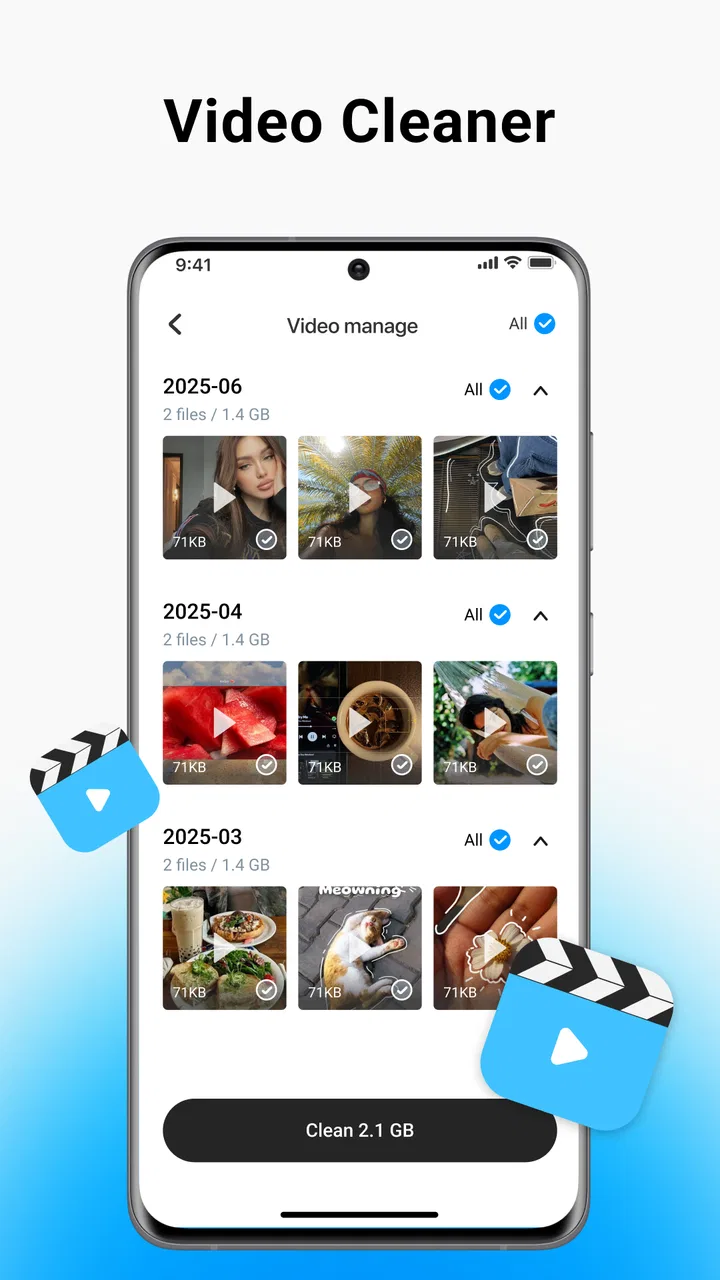
This is particularly important after a long period of taking pictures or receiving videos in messaging conversations. A phone may appear full because of large media files, but deleting small miscellaneous items will not solve that problem. CleanMas makes the most sense when I use it as a sorting aid: find where the space is going, then remove only the material I no longer need.
Why mobile situations change the decision
On a phone, cleanup usually happens at inconvenient moments. I might be trying to record a family event, download a map, install an update, or take a picture when the storage warning appears. In that situation, CleanMas can be useful as a focused tool because it gives me a reason to pause and examine pictures, videos, and other unwanted files instead of randomly deleting items from the gallery.
Still, a rushed cleanup is not the best cleanup. If I am standing outside with a nearly empty battery, limited data, or only a few seconds before an important moment, I would use the phone’s immediate storage settings first if they are already available. A dedicated cleaner is better when I have enough time to check thumbnails and filenames. The app is not a substitute for a calm decision-making process.
One practical workflow is to separate urgent space recovery from routine maintenance. For urgent recovery, I would target large videos that I have already watched or backed up elsewhere. For routine maintenance, I would examine old screenshots, repeated downloads, and media from conversations. This distinction prevents a common mistake: deleting many small files while leaving the largest storage users untouched.
CleanMas may also suit someone who does not enjoy navigating several Android settings screens. The appeal is not that it changes the nature of storage management; it is that a dedicated interface can make the task feel more visible. I found that useful for building a habit, but I would still verify every group before removal.
The less obvious value of reviewing media in groups
Pictures and videos are emotionally different from ordinary junk files. A screenshot of a temporary confirmation, a downloaded image, and a personal photograph may all appear as media, but they do not deserve the same treatment. My strongest advice is to use CleanMas in short passes rather than attempting a total purge in one sitting.
Start with material that has an obvious expiration date: screenshots of delivery details, temporary documents, short clips sent for reference, or images saved only to share once. Then move to larger videos. Leave personal photographs until last, when you are less likely to make an impulsive decision. This simple order is more valuable than any promise of automatic convenience because it keeps the highest-risk files out of the first sweep.
Another useful habit is to check whether a file exists in more than one place before deleting it. A picture may be visible in a gallery, a file browser, and a messaging folder without being three independent memories. If CleanMas shows a candidate that I recognize, I would open or preview it through the phone’s normal tools before confirming removal. That extra step takes longer, but it reduces the chance of losing something important.
When a cleanup attempt goes wrong
Any app that helps remove files needs a recovery mindset. Before I approve a large selection, I would make sure important photos and videos are already stored somewhere I trust. That could be another device or a backup service, but I would not treat the presence of a cleanup app as protection against mistakes. The safest deletion is still deletion made after a second look.
If CleanMas appears to stall, I would avoid repeatedly starting the same scan or cleanup action. I would wait, close the app normally if necessary, and reopen it later. On a phone with very little free space, general performance can already be poor, so a slow response does not automatically mean the app has failed. Repeating commands can make it harder to know what has actually happened.
If the phone becomes unstable during a cleanup session, my next step would be to stop using the app and check the device’s own storage screen. The goal is recovery, not loyalty to one tool. Android’s built-in controls are the better fallback when I need to understand the overall storage situation or confirm whether space has actually been released.
I would also avoid treating an empty-looking category as proof that the phone is clean. Storage can be consumed by application data, downloads, system files, and media stored in locations that a particular cleanup view does not emphasize. CleanMas is most helpful when its results are interpreted as one view of the phone, not as a complete technical diagnosis.
Using it without wasting mobile data
Because the app focuses on files already associated with the phone, my data-conscious approach is simple: do the actual review on Wi-Fi when possible, and avoid combining cleanup with large uploads, restores, or media synchronization. If a service is backing up photos at the same time, deleting files can create confusion about whether a copy has finished uploading or whether the local version is the only one available.
I would first confirm that important media has finished syncing through the service I use, then review unwanted local material in CleanMas. This is a small but important separation of tasks. Cleanup and backup are related, but they are not the same operation. Mixing them makes it harder to tell whether a deleted file is safely preserved elsewhere.
People with limited data plans should also avoid judging the app by a single hurried session on mobile data. Open it when connected to trusted Wi-Fi, perform the review, and leave heavier media transfers for a separate time. I would not grant a cleaner permission to remove files simply because the phone is displaying a storage warning. A warning creates urgency, but it does not identify which files are safe.
There is a broader privacy and control benefit to this cautious method. When I choose files by category and context, I remain aware of what is leaving the phone and what is being removed from it. A large automatic action may feel efficient, but it can hide the difference between disposable clutter and personal content. CleanMas works better for me as a guided decision tool than as an unattended maintenance button.
Who should use CleanMas, and who should choose another route?
I would recommend CleanMas to Android users who regularly accumulate pictures, videos, screenshots, and downloads but do not want to manage every folder manually. It is also a reasonable choice for someone who wants a more approachable cleanup routine than the standard settings area provides. The free price lowers the barrier to trying it, and the Everyone age rating makes it suitable for a broad audience.
I would be more cautious about recommending it to advanced users who already have a strict file-management system. If you know exactly which folders consume space and prefer to control every deletion yourself, Android’s built-in storage tools or a full file manager may be clearer. Those alternatives can provide a more complete view of the device, while CleanMas is oriented toward making common clutter easier to notice.
I would also skip a cleanup session when I am handling irreplaceable photographs, work documents, or files whose origin I cannot identify. In those cases, the better option is to organize and back up first. No cleaner can decide the personal value of a file from its size or location alone. The app can reduce the effort of finding candidates, but it cannot replace judgment.
Compared with manually opening the gallery, file manager, downloads folder, and Android storage settings one by one, CleanMas offers a more concentrated starting point. Compared with a highly technical file-management app, it is likely to feel less intimidating but also less suitable for detailed control. That trade-off is the central reason to choose it: convenience for ordinary clutter, not a complete replacement for every storage tool.
My practical routine after testing it
My preferred routine begins with a quick look at the phone’s available space and the kind of content causing the problem. I then open CleanMas and work through the least sensitive material first. Temporary screenshots and clearly disposable downloads come before personal photos. Large videos get individual attention because they can free meaningful space, but they also deserve a careful preview.
After each small batch, I would return to the phone’s storage view rather than assuming the result. This confirms whether the cleanup addressed the real issue. If the phone still feels full, I would investigate application data, offline media, and other storage categories instead of repeating the same scan. That is one of the most important trade-offs: a cleaner can make visible clutter easier to handle, but it cannot make every form of storage consumption disappear.
I would run this routine when I am at home or somewhere with dependable connectivity, enough battery, and time to review files. I would not use it as a reflex every time an app displays a warning. A monthly or occasional review is more sensible than constant deletion, especially for people who take many photographs and may later need to find older memories.
For a family phone, I would be even more deliberate. A child’s screenshots, a shared device’s downloaded videos, and a parent’s personal photographs can sit beside one another. I would not let another person’s files become part of a quick cleanup unless everyone understands what will be removed. The Everyone rating describes who can use the app, not who should be trusted to make every deletion decision.
What the rating and version suggest in context
The 3.9 average from around 2.7 thousand ratings gives CleanMas a mixed-but-usable impression. I read that as a sign that the basic idea works for many people while the experience may not satisfy users looking for a perfect, fully automated solution. Its current V1.0.6 label also makes me keep expectations practical: I would judge it by whether it helps me find disposable files safely, not by expecting a mature power-user suite.
BetterFly Games has positioned this product in the tools space rather than as a gallery replacement or a full file-management environment. That distinction matters. I would use it to begin a cleanup, then rely on normal Android controls when I need deeper information. The app earns its place when it saves me from hunting through several locations, but it should not be the only source of truth about the phone.
My final view on CleanMas
After using CleanMas with a careful workflow, I see it as a convenient helper for people whose phones are crowded with unwanted pictures, videos, and everyday digital leftovers. Its strongest quality is focus: it encourages me to look at clutter as something that can be reviewed in manageable groups instead of as one confusing storage problem.
The connectivity angle reinforces my main advice. Use it when the phone is stable and you have time, avoid rushed deletion on unreliable mobile data, and keep backup or synchronization tasks separate from cleanup. If a session fails or feels unclear, Android’s own storage controls are the right fallback. That approach makes the app useful without pretending it can solve every storage issue.
My recommendation is cautious but positive: try CleanMas if you want a free, approachable way to review common media clutter on Android 7.0 or later. I would not hand it complete responsibility for irreplaceable files, and I would choose a built-in storage manager or a more detailed file tool when I need technical control. Used as a deliberate first pass rather than an automatic eraser, CleanMas can make an annoying phone-maintenance job easier to understand and safer to complete.
FAQs for CleanMas
01What is CleanMas and what does it do?
CleanMas is an advanced mobile application designed to optimize and clean your Android or iOS device. It helps in removing junk files, clearing cache, and managing storage effectively. By doing so, it enhances your device’s performance, improves speed, and ensures more efficient use of storage space.
02Is CleanMas safe to use on my device?
Yes, CleanMas is safe to use. It has been developed with stringent security measures to ensure that your personal data remains secure. The app only accesses necessary system data to perform cleaning and optimization tasks, without compromising your privacy or device’s security.
03How frequently should I use CleanMas for optimal performance?
For optimal performance, it is recommended to use CleanMas at least once a week. Regular cleaning helps in maintaining device speed and preventing unnecessary storage bloat. However, the frequency can be adjusted based on your usage patterns and storage needs.
04Does CleanMas consume a lot of battery or system resources?
CleanMas is designed to be lightweight and efficient. It consumes minimal system resources and battery power while performing its tasks. The app runs smoothly in the background and is optimized to ensure that it does not affect your device’s overall performance.
05Are there any premium features available in CleanMas?
Yes, CleanMas offers premium features for users who wish to enhance their experience. These features include advanced cleaning options, real-time monitoring, and priority customer support. Users can choose to upgrade within the app to access these additional functionalities.
Pros
- User-friendly interface
- easy to navigate.
- Effective junk file cleaning.
- Improves device performance noticeably.
- Customizable cleaning options.
- Low resource usage
- runs smoothly.
Cons
- Ads can be intrusive at times.
- Limited features in free version.
- Occasional false positives in scans.
- No support for older OS versions.
- Requires internet for some features.

CleanMas
Gallery